
You pick up your phone to check one thing. A message becomes a feed, a feed becomes another app, and the moment you had to yourself is gone.
What if that first glance gave you something worth keeping?
A line from Seneca about the time you keep postponing. A thought from Epictetus about what is yours to control. Something you can carry into the next decision you make.
That is the idea behind Stoic Widgets: bring a little philosophy to the screen you already look at, so returning to it becomes part of an ordinary day.
US App Store · October 7, 2026
1. A small place to begin
Perhaps you have been meaning to read Meditations. Perhaps you have saved a dozen quotes and rarely looked at them again. Interest is easy to find; a place for it in your day can be harder.
With Stoic Widgets, a passage can sit beside the apps you use every day. Pick a visual theme, add a Home Screen widget, and the words are there when you return to your phone. You can save the thoughts you want to revisit and explore more inside the app.
You can begin with one thought. Read it on the way out of the house. Remember it before a difficult conversation. Come back to it when the day does not go to plan.
2. See what one sentence can give you
Take this line from Seneca’s letter on fear:
“We suffer more often in imagination than in reality.”Seneca · Moral Letters, 13.4
Translated by Richard M. Gummere
Seneca is writing to a friend who is anticipating trouble. He asks him to examine what has actually happened and what he is merely expecting.
Applied to an ordinary day, the question becomes specific: am I responding to the conversation I had, or the argument I have rehearsed in my head? Is there something I can do now, or am I spending the afternoon imagining an outcome?
That is a useful question to have nearby. Stoic Widgets brings passages like this onto your Home Screen. Follow the link below to read the full letter whenever you want to go further.

Read the original
On Groundless Fears
Seneca’s advice on the troubles we meet before they arrive.
Read Letter 133. What people reported after two weeks
We wanted to know what people noticed when Stoic ideas became a regular presence in their day. In our company survey of 1,000 people, participants reported higher mindfulness after two weeks.
From our user survey
1,000 participants · Two-week survey
Company-reported findings from our user survey. Self-reported outcomes. About this result
Research on Stoic practice offers another reason to pay attention. In Tim LeBon’s report on Stoic Week 2024, 354 people with matched questionnaires reported a 13% rise in life satisfaction after the programme. This was a self-selected course without a control group, rather than a test of Stoic Widgets.
The practical invitation is simple: give an idea enough attention to try it. A widget puts the reminder within reach. The practice might be pausing before you reply, starting the task you have delayed, or letting go of an outcome you cannot choose.
4. Make it something you want to look at
A reminder has a better home when it belongs on your screen. Stoic Widgets lets you explore different visual themes, from classical imagery to quieter landscapes, and find a style you enjoy returning to.
You can keep a passage where your thumb is about to open another app. You can save a favourite for later. And when a few words catch your attention, the original texts linked here let you explore the idea further.
One App Store reader, R.J.Garrison, describes the everyday appeal in a few words:
“Keeps me going through the day.”
Another, Sam San 24, writes:
“Great app. I was always into stoicism and this gave me exactly what I was looking for!”
5. Give your next glance a different starting point
There is a line in Seneca’s first letter: “While we are postponing, life speeds by.”
You could read it once and move on. Or keep it somewhere it can meet you again—on the morning you are waiting to feel ready, or the afternoon you have found one more reason to delay.
That is the place Stoic Widgets is designed to occupy: a small part of your screen, with something worth thinking about.
Get Stoic wisdom on your screen
Find a theme you like. Add your first widget. See which thought stays with you today.
Explore Stoic WidgetsAvailable on the App Store. In-app purchases apply.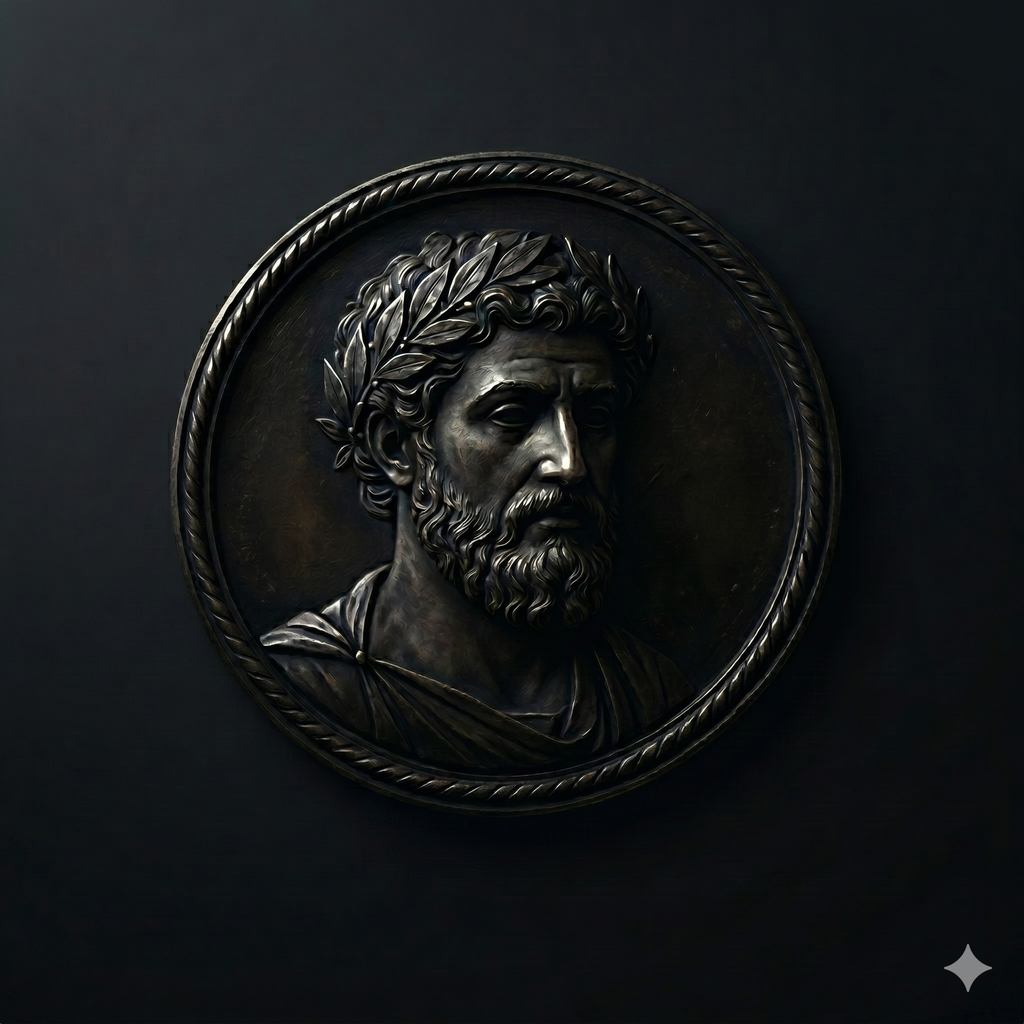
About the writer
The Stoic Widgets Team
We make Stoic Widgets. This article is published by WIDGET WORKS LLP and includes links to our app, alongside the original texts and research discussed above.
Sources & study notes
- Company survey: the 1,000-person, two-week result is reported by the Stoic Widgets team and reused from our funnel. It describes a 66% increase in self-reported mindfulness, not the percentage of participants who improved. It has not been independently verified for this article.
- Independent research: Stoic Week 2024, Tim LeBon. The report calculates change among 354 matched participants. This was an uncontrolled, self-selected course study, not a test or endorsement of this app.
- Ratings and reviews: US App Store, checked October 7, 2026. Ratings can change. Reviews describe individual experiences.
- Original texts: Seneca, Letter 13.4 and Letter 1.2, translated by R. M. Gummere. Epictetus, Enchiridion, translated by Elizabeth Carter. Everyday examples are our own applications.